

Inside a Nursery Classroom What Daily Life Looks Like for Toddlers in …
-
Inside a Nursery Classroom What Daily Life Looks Like for Toddlers in …
Introduction
Want to send your child to the nursery schools? Parents are mostly excited and nervous while enrolling their child to the best nursery schools in Howrah. Are you also one of those parents? You might wonder: What actually happens once the classroom doors close? Is my child eating properly? Are they making friends or feeling overwhelmed?
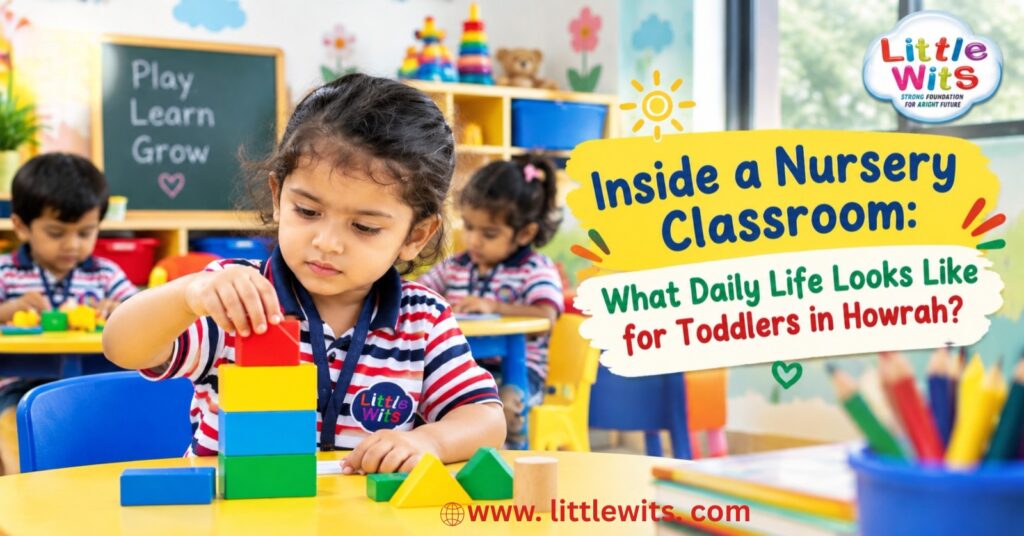
Modern nursery education in Howrah has evolved far beyond traditional sit-and-repeat learning. Today, top preschools focus on holistic early childhood development, blending play, sensory activities, and social integration. Here is a peak inside a typical day in a nursery classroom to see how toddlers spend their morning.
Our Little Wits School, Liluah is known for providing the best education to toddlers from their early age. Our school follows CBSE curriculum and known for the best infrastructure and teaching methodologies. Today, through this web blog, you will get to know what daily life looks like for toddlers in Howrah?
Morning greetings and circle time
The day begins with warmth and routine. Around 8:30 AM or 9:00 AM, teachers greet little ones with cheerful smiles, helping them transition smoothly away from parents.
The morning official start is Circle Time. Toddlers gather on colourful mats to sit together.
i). Rhymes & Music: Singing Bengali and English nursery rhymes builds phonological awareness.
ii). Weather & Feelings Check: Children point to weather cards or share how they feel using simple emotion charts, nurturing early emotional intelligence.
Play based learning and fine motor skills
After circle time, teachers of academic schools in Howrah emphasises learning through touch and movement rather than heavy memorisation.
i). Building Blocks & Puzzles: Stacking wooden blocks or fitting puzzle pieces together strengthens spatial awareness and problem-solving skills.
ii). Playdough & Finger Painting: Squeezing clay or painting with fingers builds hand strength, preparing small wrist muscles for future handwriting in primary school.
Snack time and independence
After the morning greetings and play based learning, toddlers of the Little Wits School, Liluah get time for snacks and independence. Snack time is a nursery setting serves a dual purpose, nutrition and life skills training.
Skill Practiced How Teachers Guide It Hygiene Washing hands independently before and after meals. Self-Help Unpacking lunchboxes, opening water bottles, and tidying up crumbs. Social Etiquette Waiting for turns, saying “please” and “thank you,” and sharing table space. Outdoor play and gross motor development
Our school teachers believe that rather than studying, outdoor play and development of gross motor skills are also very important. Toddlers run, slide, balance on soft steps and play ball games. These activities refine gross motor skills, enhance coordination, and burn off excess energy. Outdoor play also teaches important social lessons like waiting in line for the slide and playing cooperatively.
Storytelling and wind down
Before the home bell rings, teachers of the best nursery schools in Howrah gather children for Storytime. Storytellers use big picture books, hand puppets, and expressive voices to bring tales to life.
Listening to stories expands vocabulary, lengthens attention spans, and inspires curiosity about the world. Following Storytime, children sing a goodbye song, pack their bags, and get ready to greet their parents.
Why early childhood education matters
A well-structured nursery environment provides more than just childcare. It bridges the gap between home and formal primary education, giving toddlers in Howrah a safe environment to build confidence, empathy, and curiosity.
When you pick up your toddler at the end of the day, they might not tell you everything they did—but every song sung, block stacked, and story heard is laying the foundation for a lifetime of learning.
Conclusion
A typical day in a Howrah nursery classroom is thoughtfully structured to blend play, discovery, and social development. From morning circle time and sensory learning activities to guided storytelling and outdoor play, toddlers build foundational motor and language skills in a secure environment. For parents, understanding this daily rhythm offers peace of mind—knowing that early schooling in Howrah provides a safe, nurturing space where toddlers can transition smoothly into formal education.
FAQs
Q1. What is the typical daily schedule in the best nursery schools in Howrah?
Ans: – Daily schedules at the best nursery schools in Howrah usually run for 3 to 4 hours in the morning. A standard day includes a morning greeting circle, sensory and play-based learning stations, a snack break, outdoor or free play, storytelling, and a calm wrap-up session before dismissal.
Q2. How do Little Wits School, Liluah help toddlers adjust separation anxiety?
Ans: – Little Wits School, Liluah maintain child proof classrooms with rounded furniture, soft play areas, CCTV safety and campus areas to ensure toddlers safety.
Q3. How do teachers communicate a child’s daily progress to parents?
Ans: – Academic schools in Howrah communicate regularly through digital parent apps, daily communication notebooks, weekly updates, and periodic parent-teacher meetings (PTMs) to share behavioural milestones and daily activity updates.